
We call our beloveds by many names. Whether a given name, an adopted name, a "pet" name or something else, each name encodes a special relationship and a story about it.Why should it be different for the Beloved that we call God? It's not. "God" isn't a Name but a role, a function. As for the… Continue reading What’s In a Name? P. Vaera
Category: Shir Ami

The Angelic Art of Redemption: P. Vayehi
Before it's all said and done, what do we make of the dust-ups, hurts, disappointments and dramas of our messy lives?it's tempting to answer that we bear them as best we can, and even make meaning of them – and hopefully we do. But is there more?Is there a way to redeem what happens in… Continue reading The Angelic Art of Redemption: P. Vayehi
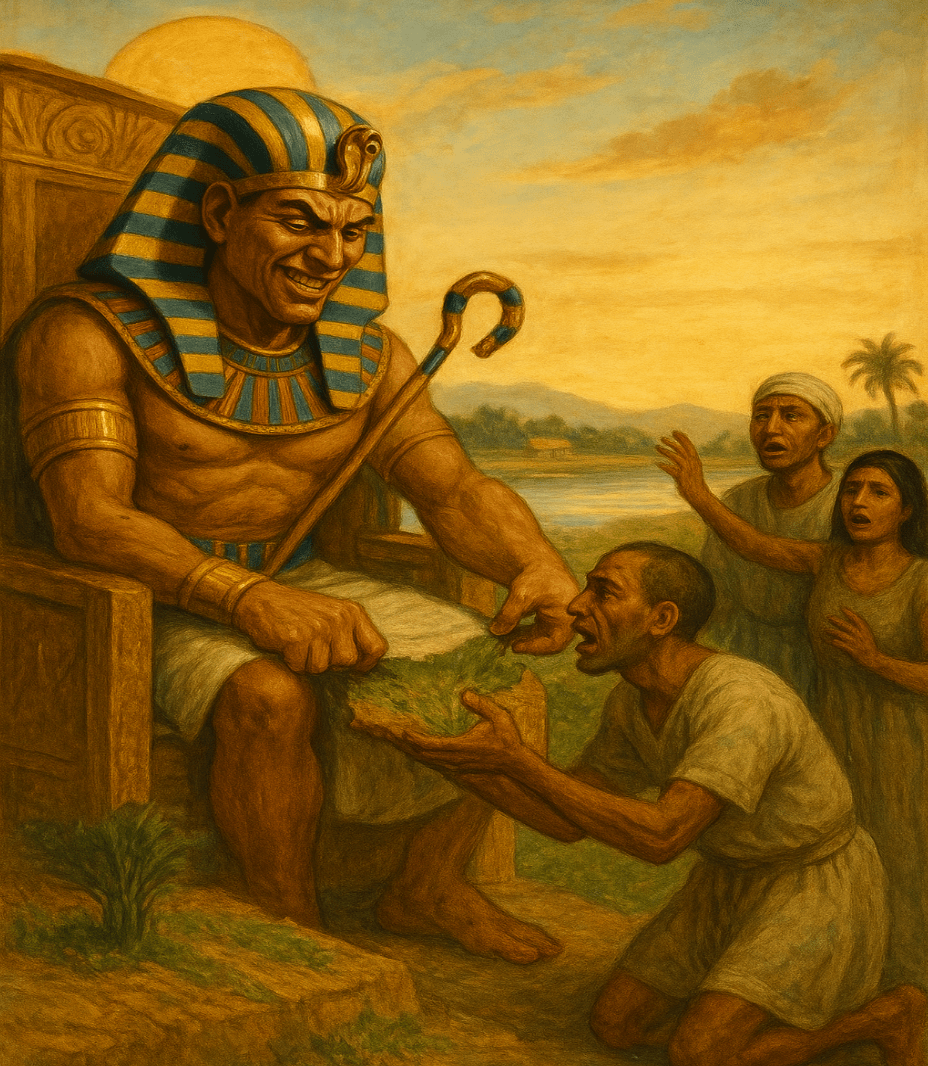
Subverting Absolute Power: P. Vayigash
We live in an era of rising global strongmen and eroding guardrails for democracy.Judaism has seen much in its 3,500 years, including the rise and fall of many strongmen.Effective frontal confrontations are rare against absolute power and its penchant for corruption. Such powers tend to entrench themselves by means as damaging and corrupt as they… Continue reading Subverting Absolute Power: P. Vayigash

The Amazing Technicolor Hindsight Stories We Tell Ourselves (P. Vayeishev)
Joseph's coat of many colors has become the stuff of art, parenting books, spiritual seeking and a now-timeless Broadway musical.And wow, is it loaded! Perhaps Joseph's coat became such a Biblical icon precisely because it is so loaded.Stitched into its amazing technicolor weave is a deep teaching about how we make meaning in our lives –… Continue reading The Amazing Technicolor Hindsight Stories We Tell Ourselves (P. Vayeishev)

Hearing the Unheard: P. Vayishlah
Sometimes received religious traditions fail to hear the voice of suffering. Even worse, received traditions can suppress the voice of suffering. It happens because every religion, by definition, titrates high principle through inherently limited and flawed human capacity. What is our duty in response? By Rabbi David Evan MarkusVayishlah 5786 (2025)Past Divrei Torah on this portion:• On Mideast Peace: Is… Continue reading Hearing the Unheard: P. Vayishlah

Rational Spirituality Beyond Belief (P. Toldot 5785)
Believers might readily embrace the spiritual prospect of asking God a question and receiving a response (whether with a knowing or feeling beyond self, or an inner sense within).But how about disbelievers? In a rational world of left-brain logic, can suffering and brokenness drive a rational response that is spiritual? Indeed they can, and the… Continue reading Rational Spirituality Beyond Belief (P. Toldot 5785)

The Pause that Refreshes (P. Chayei Sarah)
When we think of a "pause that refreshes," most modern Jews will think of Shabbat. For sure.Turns out that a daily "pause that refreshes" is good for the soul, and for work efficiency, and physical health. And it's very Jewish.Read on, with a bonus spotlight on R. David's learning at the Institute for Jewish Spirituality.… Continue reading The Pause that Refreshes (P. Chayei Sarah)

Sick Visits (P. Vayera)
When the going gets tough, some of us have an instinct to pull in – to self-isolate, even conceal our tough times. Maybe we resist drawing attention to ourselves or our difficulties. Maybe we feel that stoicism and privacy are the best parts of valor. We cleave to normalcy like it's nobody's business. For deep reasons, Jewish spiritual… Continue reading Sick Visits (P. Vayera)

Trust and Verify (P. Lekh-Lekha)
t's okay to be afraid during times of uncertainty, especially when much is at stake. But when we let fears rule us without lovingly questioning them, we tend to make what we fear more likely to impact us. And then who are we really? By Rabbi David Evan MarkusLekh Lekha 5786 (2025)Recent Divrei Torah on this portion:• Wresting a Blessing (2023)• Where… Continue reading Trust and Verify (P. Lekh-Lekha)
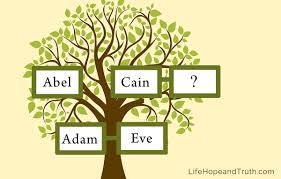
The Courage to Buck the Patriarchy (P. Bereshit)
The Torah Cycle begins again. As our ancestors have done for thousands of years, the turning of Torah's scroll aims to teach us partly by eliciting our questions.But for many centuries, one question apparently was too dangerous to the patriarchy for most to ask – which is why we must. By Rabbi David Evan MarkusBereishit 5786 (2025)Recent… Continue reading The Courage to Buck the Patriarchy (P. Bereshit)

Be Strong and Courageous (P. Vayelekh)
In this first Torah portion of the new spiritual year, traditionally read between Rosh Hashanah and Yom Kippur during most years, Moses prepares our spiritual ancestors for transition into new leadership (Joshua) and a new journey (into the Land of Promise).His way of doing so speaks to us exactly now, as we begin this new… Continue reading Be Strong and Courageous (P. Vayelekh)

For Whom We Stand (P. Nitzavim)
For whom do you stand? I don't mean physically (though we'll get to that shortly). I mean existentially: for whom do you stand?This week's Torah portion rehearses a pivotal "Stand Together" moment we will experience on Yom Kippur. Now over 700 days post-October 7, its call lands on me very differently. By Rabbi David Evan MarkusNitzavim 5785 (2025)… Continue reading For Whom We Stand (P. Nitzavim)

Truth or Consequences (P. Ki Tavo)
What we do matters: our choices and behaviors have consequences even if we pretend not.With Selihot approaching this weekend, Torah bellows this truth like a shofar blast, as if to rivet our attention to the truths of our lives and our power to renew our lives for goodness. By Rabbi David Evan MarkusParashat Ki Tavo 5785 (2025) Isaac… Continue reading Truth or Consequences (P. Ki Tavo)

To Kick Bad Habits, Watch Time (P. Ki Tetzei 5785)
Sometimes time is against us and we must act urgently – climate change, hunger, unjust wars and more. Other times, time can be our hidden partner, inviting us to watch time so that our negative impulses can abate when not immediately indulged.

Power Moves and the Rule of Law (P. Shoftim)
Each year I inwardly buzz at this week's Torah portion, which is named "judges" and centrally concerned with justice. My identity, my secular career and my efforts to walk in the world mirror back at me. It presses me, in one of Torah's famous urgings (Deut. 16:20), צֶ֥דֶק צֶ֖דֶק תִּרְדֹּ֑ף / tzedek tzedek tirdof – "Justice! Pursue justice!"
What’s Mine is Yours (P. Ekev)
Western thought tends to hold that what we "own" – what we buy, what we earn, what we produce – is truly and only "ours." Whoever we are and whatever our politics, much that we know about democracy and capitalism assumes this fundamental premise. The idea is so basic and engrained that we hardly notice it – and… Continue reading What’s Mine is Yours (P. Ekev)

Recovery After Disappointment, and a Pregnant Moses (P. Vaethanan)
We've all known disappointments – some deeply personal, others collective and even global.With 20/20 hindsight, we know that there's life after our disappointments, and even blessings. In the moment that life dashes our hopes and dreams, however, often we forget.This week's Torah portion offers profound lessons about recovery after life doesn't go our way, with… Continue reading Recovery After Disappointment, and a Pregnant Moses (P. Vaethanan)

When We Don’t Want to See – Tisha b’Av, Stronger Together (P. Devarim)
This weekend in the year 70 CE, Rome destroyed the Second Temple, launched a wave of exile and depravity, and ended Judaism as it then existed.The destruction became a symbol and stand-in for much that we try not to see or think about about Jewish persecution, loss and suffering. Humans are adept at limiting our vision… Continue reading When We Don’t Want to See – Tisha b’Av, Stronger Together (P. Devarim)

Spiritual Vision: Now, and Beyond Now (P. Matot-Masei)
Last week, Israel's High Court of Justice ordered the Orthodox rabbinate of Israel to let women take rabbinic ordination examinations on the same terms as male applicants.For thousands of years, Jewish life has evolved. Varying by issue and era, some evolutions have been fast, some glacially slow, some halting and non-linear, some seemingly "two steps… Continue reading Spiritual Vision: Now, and Beyond Now (P. Matot-Masei)

The Problem of Zealotry – Part 1 (P. Balak)
Don Quixote comes to mind, though Cervantes meant his fictional character to be satire.Too many zealots, both historical and modern, are anything but fictions or mere satire.A zealot's charisma can captivate and intoxicate. A zealot's seeming commitment to principle can inspire – or blind. Adulation can reinforce the zealot's sense of rightness. Intoxicated by their own… Continue reading The Problem of Zealotry – Part 1 (P. Balak)

