
For whom do you stand? I don't mean physically (though we'll get to that shortly). I mean existentially: for whom do you stand?This week's Torah portion rehearses a pivotal "Stand Together" moment we will experience on Yom Kippur. Now over 700 days post-October 7, its call lands on me very differently. By Rabbi David Evan MarkusNitzavim 5785 (2025)… Continue reading For Whom We Stand (P. Nitzavim)

Truth or Consequences (P. Ki Tavo)
What we do matters: our choices and behaviors have consequences even if we pretend not.With Selihot approaching this weekend, Torah bellows this truth like a shofar blast, as if to rivet our attention to the truths of our lives and our power to renew our lives for goodness. By Rabbi David Evan MarkusParashat Ki Tavo 5785 (2025) Isaac… Continue reading Truth or Consequences (P. Ki Tavo)

To Kick Bad Habits, Watch Time (P. Ki Tetzei 5785)
Sometimes time is against us and we must act urgently – climate change, hunger, unjust wars and more. Other times, time can be our hidden partner, inviting us to watch time so that our negative impulses can abate when not immediately indulged.

Power Moves and the Rule of Law (P. Shoftim)
Each year I inwardly buzz at this week's Torah portion, which is named "judges" and centrally concerned with justice. My identity, my secular career and my efforts to walk in the world mirror back at me. It presses me, in one of Torah's famous urgings (Deut. 16:20), צֶ֥דֶק צֶ֖דֶק תִּרְדֹּ֑ף / tzedek tzedek tirdof – "Justice! Pursue justice!"

The Middle Pathway (P. Re’eh)
Picture it: You're walking through a valley finally green after a lifetime of wandering the desert. On each side is a mountain, and from each mountain a sound system fills the air with blessings and curses. Waves of sound echo through the valley. Your body physically vibrates with them. Your mind and heart are clutched by them: a good life, or torment.
What the Light is For (P. Beha’alotekha)
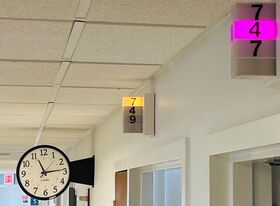
"...Hospitals usually aren't serene places. From inbound ambulance to bedside telemetry, lights flash, sirens wail and monitors beep. Late at night when I leave the hospital, the metronome of nighttime crickets evokes the beep beep beep of hospital time..."

A “Small” Teaching on Humility for the Chosen (P. Vayikra)
Open any Torah and you'll see in the first word of Leviticus a letter written in tiny superscript. It teaches us about what healthy humility is really all about. By Rabbi David Evan MarkusVayikra 5785 (2025)Open any Torah scroll to the first word of this week's Torah portion, Leviticus, which launches the third of the Five Books of… Continue reading A “Small” Teaching on Humility for the Chosen (P. Vayikra)

The Sense, and Senses, of Making Holy (P. Pekudei)
As we round the corner toward Passover, in Torah the Mishkan is finished and activated as Western life's first holy place crafted with human hands. What first made the Mishkan holy wasn't God. What first made the Mishkan holy was a human act. Which begs the question about what "holy" is, and how we humans… Continue reading The Sense, and Senses, of Making Holy (P. Pekudei)
After the Breaking, the Building (P. Vayakhel)
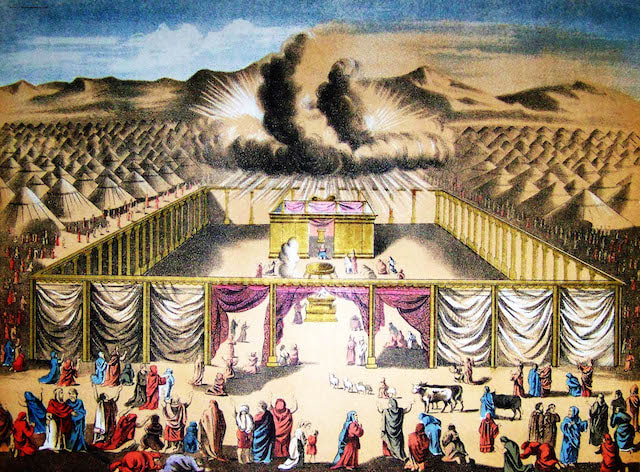
After community conflict, there are exactly two choices. One option is to stew in it, holding onto the conflict's source or how people acted during the conflict. The other option is to heal by building a worthy future together.Actually, when it comes to spiritual community, there is only one real choice. By Rabbi David Evan MarkusVayakhel 5785 (2025)… Continue reading After the Breaking, the Building (P. Vayakhel)

Unbend the Knee (P. Ki Tisa)
I rarely engage with artificial intelligence, but recently I asked ChatGPT to depict the "Golden Calf of modern society." This image was ChatGPT's response.For Persia in the Purim story we commemorate this week, the Golden Calf was Haman, the xenophobic prime minister. For our spiritual ancestors in Exodus days, it was literally a Golden Calf… Continue reading Unbend the Knee (P. Ki Tisa)

Lights On! (P. Tetzaveh)
As our Northern Hemisphere enters the weeks of fastest increasing daylight and we accelerate into the oncoming spring (not a moment too soon!), this week's Torah portion opens with a command to make eternal light.The command aims at all of us, and the sudden absence of Moses underscores the message at this important moment. By Rabbi… Continue reading Lights On! (P. Tetzaveh)

Giving, Up (P. Terumah)
In liberal Jewish life, mitzvah often is translated as "good deed" and tzedakah as "charity." To English speakers, both sound optional.In Jewish life, however, they're not optional. They are mandatory and essential to Jewish continuity and resilience. The whole point is to rise, and lift others as we do, and together raise up the holy. By… Continue reading Giving, Up (P. Terumah)

Wise Restraints and Sapphire Skyways (P. Mishpatim)
The Judaism of tradition is full of laws. It's easy to get lost in the laws, miss their ultimate point and turn our backs.But societal moments that spotlight the rule of law often reveal grave risks when folks can accept or reject the role of law as they please. The point of law is to… Continue reading Wise Restraints and Sapphire Skyways (P. Mishpatim)

The Eleventh Commandment (P Yitro)
Ten Commandments. We've read them. We've seen the art. We've seen the movie.Jewish continuity, ethical purpose and spiritual becomingness all trace back to the pivotal sense-scrambling scene at Sinai. It is said that each of us was there, the roots of our souls joined in the creation of our collective covenant. On the Ten Commandments… Continue reading The Eleventh Commandment (P Yitro)

The Impossible Song of Our People (P. Beshallach)
It was impossible. The liberation from bondage – our birth through the Sea of Reeds that opened into a birth canal – it could not happen.Yet here we are, and we've been talking about it ever since. The splitting Sea animates Jewish liturgy. It drives Judaism's identity of ongoing human liberation from bondage, xenophobia and… Continue reading The Impossible Song of Our People (P. Beshallach)

Come to Narcissist – P. Bo
We all have emotional and psychological vested interests in seeming externally to be our best selves. Most of us, we hope, respond to these impulses by actually trying to be our best selves in the world. Our insides aspire to match our outsides.For others, the optics of manipulated perception are the primary reality or even… Continue reading Come to Narcissist – P. Bo

The Moral Arc Discovered (P. Vaera)
No liberation is easy. Each begins with a promise that seems too good to be true. Even a promise can seem fanciful during the squeeze of hurt or bondage – like a fantasy, or a delusion. If there's a moral arc at all, at first it can seem out of reach. So it was for Dr. King. So it was for Moses. So it is for every liberation and transformation.

The Name of Becoming (P. Shemot)
Who (or What) is God? It's a question (perhaps the question) of the ages, and no blogpost can fully do it justice. Yet it is exactly the subject of Moses' first encounter with the One we call God: how should the Children of Israel name their liberator? And nothing has been the same ever since.
The Days Approached (P. Vayehi)
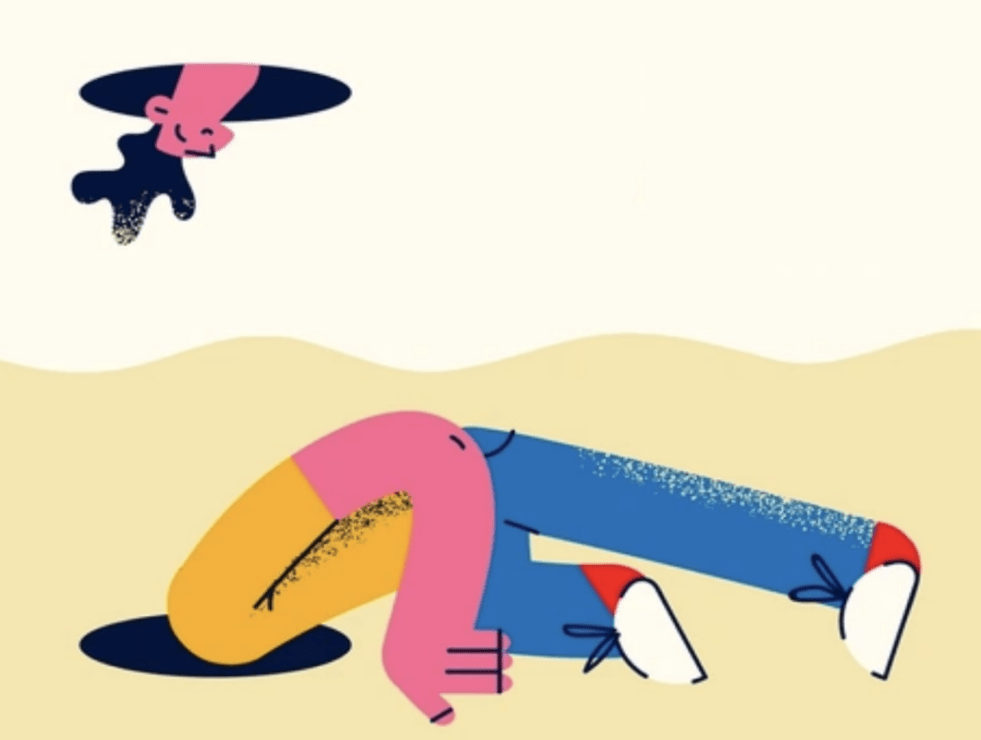
At some point (maybe many points), life teaches us that what we see depends on how we see. So it is with our perspective on life itself. Few of us go through life deeply inhabiting the ultimate truth of our own mortality. But once we do, the very limits of our lives can help imbue them with greater richness and meaning. If we let them.

Showing Up, Taking Responsibility (P. Vayigash)
t's not my fault. Why should I take responsibility for any part of it? We're all prone to say so. Yet our penchant to claim rightness has spiritual and practical limits. Our acts and omissions ripple out far beyond their space and time, and Jewishly we claim collective responsibility for much seemingly beyond ourselves.Just ask the… Continue reading Showing Up, Taking Responsibility (P. Vayigash)
 David Evan Markus