
t's not my fault. Why should I take responsibility for any part of it? We're all prone to say so. Yet our penchant to claim rightness has spiritual and practical limits. Our acts and omissions ripple out far beyond their space and time, and Jewishly we claim collective responsibility for much seemingly beyond ourselves.Just ask the… Continue reading Showing Up, Taking Responsibility (P. Vayigash)
Author: velveteenrabbi
R. Rachel Barenblat has been blogging as the Velveteen Rabbi since 2002.
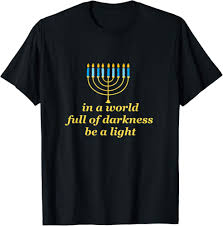
Be A Light (P. Miketz)
It's telling that Hanukkah is one of the Judaism's most popular holidays: more than any other ritual, Jews light candles for the Festival of Lights. Amidst so much darkness it's tempting to think that the candles we light can't do much – and in truth, wee candles can't do much. They certainly don't automatically dispel the world's darkness. But that's not the point. The candles aren't the point. We ourselves must be the light.

Pointers Along the Way (P. Vayeshev)
What if the random nondescript person actually held the missing piece of our puzzle? What if the bad driver who cut us off on the highway actually put us in the right place at the right time? What if we lived into the possibility that our lives are full of pointers hidden amidst the mundane? What if they've been there all along?
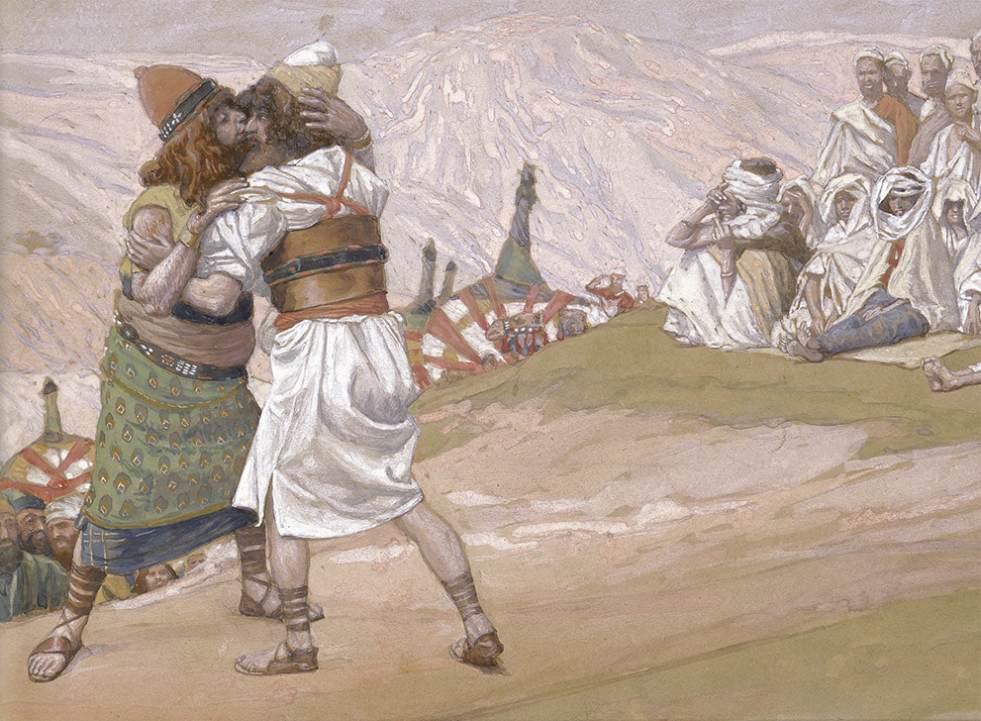
On Mideast Peace: Is ‘Yes’ Possible? (P. Vayishlah)
Is peace possible? What might it take to imagine real reconciliation between the Children of Israel and the Children of Eisav, the Biblical brothers whose descendants became Jews and Arabs? If their Biblical relationship could go south and rebound, can our world get past xenophobia? By Rabbi David Evan MarkusVayishlah 5785 (2024) Click here for last year's post on… Continue reading On Mideast Peace: Is ‘Yes’ Possible? (P. Vayishlah)
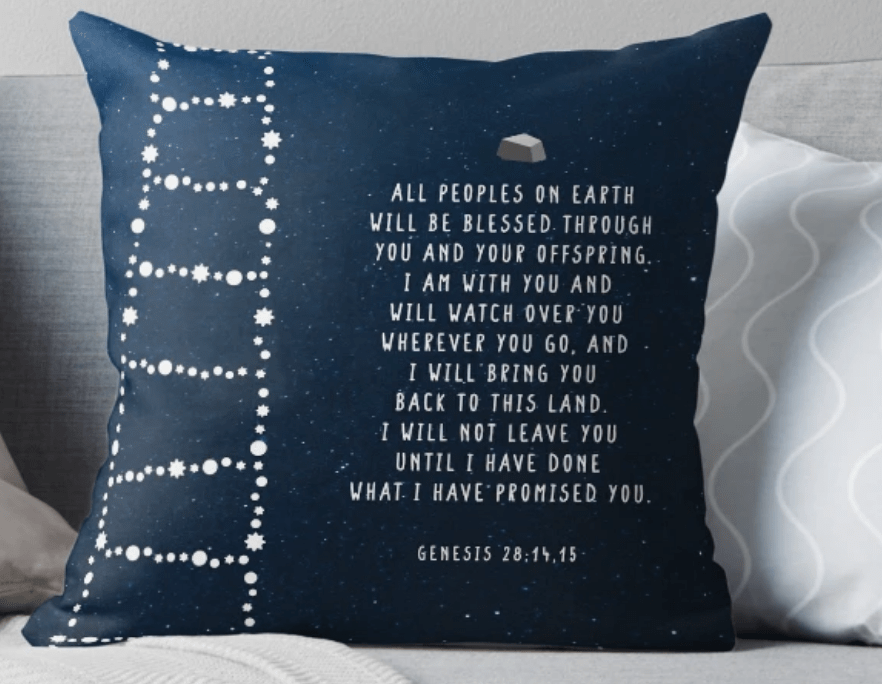
Wherever You Put Your Head (Vayetzei)
Jacob's dream of a mystical ladder is one of my personal favorite encounters of Torah. Jacob has a transformational experience he didn't anticipate, didn't plan for and didn't fully understand. He learned that he might experience God wherever he went, wherever he put his head.Same for us. By Rabbi David Evan MarkusVayeitzei 5785 (2024) Click here for… Continue reading Wherever You Put Your Head (Vayetzei)
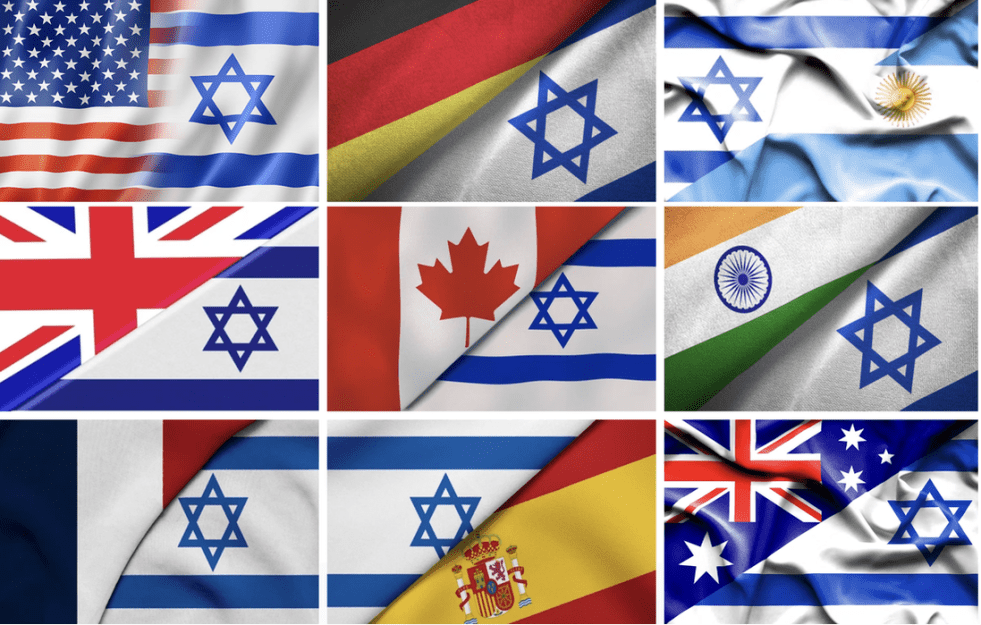
The Flags Up Front (P. Toledot)
We're all global citizens of a shared and fragile planet. And at the same time, Jewish life – and with it, global diversity and genuine belonging – tends to ebb and flow in cycles of societal turbulence. Yet again, Jews and other minorities face a recurring existential question: who are we relative to where we are? In the U.S. flag's stars and stripes, there is still enough starlight for all of us.

Where Are We Going – Post-Election 2024 (P. Lekh Lekha)
Rabbi David offers brief words written at sunrise after Election Day 2024.We don't know what the days to come will bring – not for us, not for our country, not for the world.We've never been here before, but in a sense we have. Over the long view of centuries, as a people we have experienced many… Continue reading Where Are We Going – Post-Election 2024 (P. Lekh Lekha)

On Love and War – Sermon for Yom Kippur 5785 (2024)
Opinions and arguments. War. Antisemitism. Elusive hopes for peace. Pride and prejudice. Morality in the crosshairs. What we're about. What we want to be about. What we crave to be about. And back to opinions and arguments, and war, and antisemitism....Amidst the swirling chaos of the year that's been, and so much hurt still ongoing,… Continue reading On Love and War – Sermon for Yom Kippur 5785 (2024)
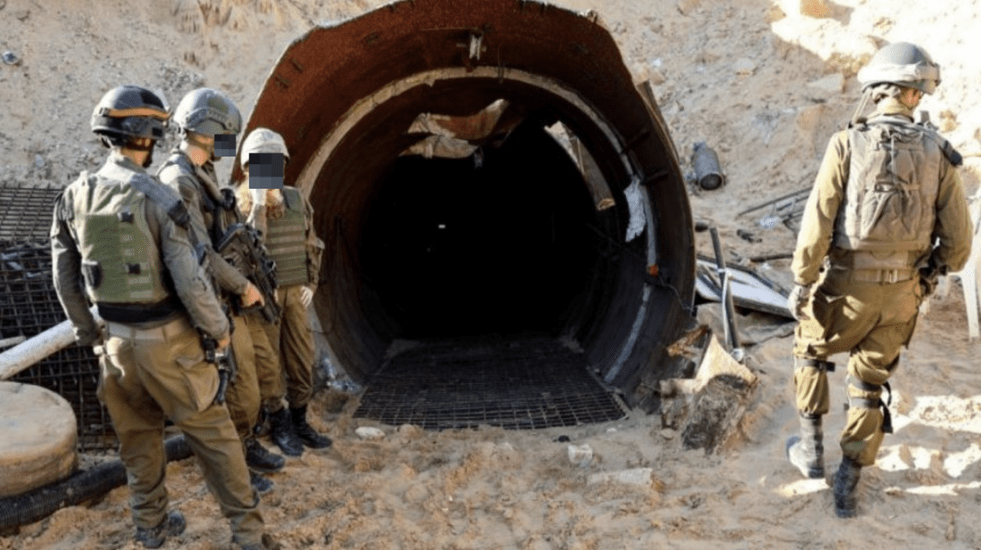
The Tunnel of Love – Kol Nidre 5785
The Tunnel of Love – Sermon for Kol Nidre 5785 (2024) There are times in life that rivet us on what's core and strip away the rest. In those moments, we can enter a tunnel of love and be transformed. If we're purposeful, or lucky, we can experience these times long before our last time. We can experience Eckhart Tolle's… Continue reading The Tunnel of Love – Kol Nidre 5785

Our Shared Heart: Rosh Hashanah 5785 (2024)
Judaism's time-tested superpower is community – not because it's easy, not because we're similar, but because community is the mainstay channel for the kind of existential love that heals society. This love is possible because spiritually, we share one heart. It's equally true if times are tough and even more important then – but also harder. Note: These remarks concern… Continue reading Our Shared Heart: Rosh Hashanah 5785 (2024)
What The World Needs Now: Sermon for Erev Rosh Hashanah 5785 (2024)
Rabbi David introduces our High Holy Day theme for 5785 amidst the anxiety of this hour. We remember that the core mitzvah of Jewish life is to love – not to be loved – come what may. And we remember that, even when deep pain causes us to lose this elemental love, we can find it anew. Shanah tovah. … Continue reading What The World Needs Now: Sermon for Erev Rosh Hashanah 5785 (2024)

Who’s In? You’re In. We’re All In. – P. Nitzavim-Vayeilech
One of my favorite moments of the Jewish year is coming... and it's probably not what you think. There's a point on Yom Kippur when we come together as if to receive anew the ancient covenant, knowing that the very act of being together magnetizes that covenant. But Torah's basis for this moment, in this week's portion, asks us to read it in a counter-intuitive way.

Blessed or Cursed? – P. Ki Tavo
We humans are meaning makers: our spirituality concerns not only what happens but also what we make of what happens. Every day of our lives, usually just below the surface of our awareness, we decide what matters most and what our choices say about us and our lives. This sacred season rivets our focus on this often unconscious inner process – and how it utterly depends on what we say and do together.
God is In the Details – P. Ki Tetzei
We've probably heard the aphorism that "the devil is in the details." Leaving aside that classical Judaism doesn't really do "devil," spiritually the emphasis is backwards. Not the "devil" but God is in the details. The sacred inheres in our total showing up to our lives and the details of how we narrowcast our attention – especially during these precious days leading to Rosh Hashanah.

The Greatness to Lead Small
In a few short weeks, Jews worldwide will gather to proclaim Avinu Malkeinu – Our Parent, Our Sovereign. The Jewish notion of a "sovereign," whether divine (God) or mortal (king or queen), hails from this week's Torah portion that is laser-focused on the interplay of justice and humility. Because too often the two don't go together.

Our Own Way – P. Re’eh
Modern spirituality uplifts personal choice. Most of us understand liberal Judaism to invite each of us individually to question, wrestle, discern and decide for ourselves, liberated from mandate and commandedness. That's what liberalism means: the liberty to choose for ourselves, based on the rights and equal dignity of each individual. Yet Judaism also is a team sport. We can't all go our own way and survive, much less thrive.

The Neck’s Cure is the Heart – P. Ekev
Week by precious week, we're shown how we strayed from our best selves. Slowly at first, this season hints, asks, presses, cajoles, demands and then forces us to see some things that maybe we labor mightily not to see. We turn away, perhaps with the whole of our lives or just a part. Or we turn away from truths about ourselves. In Torah's words, we become "stiff necked." This season's call to turn back means that we must our neck, and this turn begins... on our hearts.
What’s Love Got to Do With It? – P. Vaethanan
Jewish life centers on love – not like, honor or respect, but love. Love is the core of our creed (V'ahavta), Torah's literal center ("Love your neighbor as yourself"), and the most repeated admonition in sacred Jewish text ("love the stranger, for you were a stranger"). But how can love be commanded? How can any true love be required, especially if the world feels unlovely to us? What kind of love is that? Turns out, this kind of love is most important of all.

Our Choice Not to Fear? – P. Devarim
Fear doesn't seem like an emotion we choose. Whether we experience fear as an overpowering wave, a dull ache in the gut or something else, we rarely go looking for fear. Even so, especially so, our existential choice in this season, especially this year, is whether we will choose to allow fear to inhibit us. Our answer matters utterly now.
Vows in a World Unhinged – and a World Redeemed
The High Holy Days – the Season of Meaning, the timeless Jewish call to repentance and repair. Rosh Hashanah and especially Yom Kippur always come too soon: we're never quite ready. We might even spend the summer in denial. What came of last year's vows – the promises we made to ourselves and each other, our commitment that this time we'd be different? Inner walls have a way of regrowing and old habits die hard. Naturally we develop amnesia ... ... that is, until something reminds us.
 David Evan Markus