Rabbi David introduces our High Holy Day theme for 5785 amidst the anxiety of this hour. We remember that the core mitzvah of Jewish life is to love – not to be loved – come what may. And we remember that, even when deep pain causes us to lose this elemental love, we can find it anew. Shanah tovah. … Continue reading What The World Needs Now: Sermon for Erev Rosh Hashanah 5785 (2024)
Category: Shir Ami

Who’s In? You’re In. We’re All In. – P. Nitzavim-Vayeilech
One of my favorite moments of the Jewish year is coming... and it's probably not what you think. There's a point on Yom Kippur when we come together as if to receive anew the ancient covenant, knowing that the very act of being together magnetizes that covenant. But Torah's basis for this moment, in this week's portion, asks us to read it in a counter-intuitive way.

Blessed or Cursed? – P. Ki Tavo
We humans are meaning makers: our spirituality concerns not only what happens but also what we make of what happens. Every day of our lives, usually just below the surface of our awareness, we decide what matters most and what our choices say about us and our lives. This sacred season rivets our focus on this often unconscious inner process – and how it utterly depends on what we say and do together.
God is In the Details – P. Ki Tetzei
We've probably heard the aphorism that "the devil is in the details." Leaving aside that classical Judaism doesn't really do "devil," spiritually the emphasis is backwards. Not the "devil" but God is in the details. The sacred inheres in our total showing up to our lives and the details of how we narrowcast our attention – especially during these precious days leading to Rosh Hashanah.

The Greatness to Lead Small
In a few short weeks, Jews worldwide will gather to proclaim Avinu Malkeinu – Our Parent, Our Sovereign. The Jewish notion of a "sovereign," whether divine (God) or mortal (king or queen), hails from this week's Torah portion that is laser-focused on the interplay of justice and humility. Because too often the two don't go together.

Our Own Way – P. Re’eh
Modern spirituality uplifts personal choice. Most of us understand liberal Judaism to invite each of us individually to question, wrestle, discern and decide for ourselves, liberated from mandate and commandedness. That's what liberalism means: the liberty to choose for ourselves, based on the rights and equal dignity of each individual. Yet Judaism also is a team sport. We can't all go our own way and survive, much less thrive.

The Neck’s Cure is the Heart – P. Ekev
Week by precious week, we're shown how we strayed from our best selves. Slowly at first, this season hints, asks, presses, cajoles, demands and then forces us to see some things that maybe we labor mightily not to see. We turn away, perhaps with the whole of our lives or just a part. Or we turn away from truths about ourselves. In Torah's words, we become "stiff necked." This season's call to turn back means that we must our neck, and this turn begins... on our hearts.
Vows in a World Unhinged – and a World Redeemed
The High Holy Days – the Season of Meaning, the timeless Jewish call to repentance and repair. Rosh Hashanah and especially Yom Kippur always come too soon: we're never quite ready. We might even spend the summer in denial. What came of last year's vows – the promises we made to ourselves and each other, our commitment that this time we'd be different? Inner walls have a way of regrowing and old habits die hard. Naturally we develop amnesia ... ... that is, until something reminds us.
How Women’s Lib Began – P. Pinchas
Judaism is all about collective transformation. The Jewish narrative continually has "transformed" its "collective" from a first human eventually to all humans. At the same time, the Jewish narrative continually has "transformed" roles and rights within the "collective," in fits and starts striving for dignity and equality for all. At its best, Judaism's social justice ethic does both at the same time – which is how "women's lib" began.
What Not to Be Afraid Of: P. Shlakh 5784
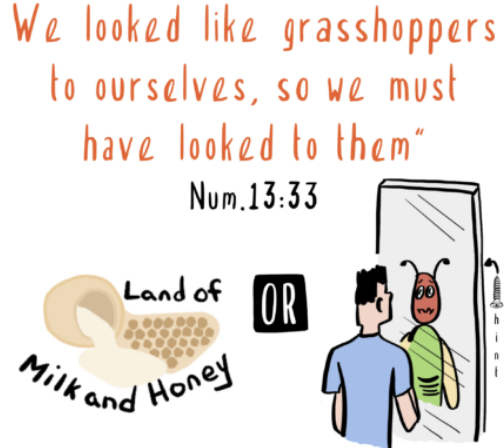
"Mirror, mirror on the wall." As the Snow White fable put it, sometimes we want to see ourselves a certain way – for good or for ill – and we project that impression on others.Except nobody is their image, and nobody goes forward in life that way. That's the ticket to going backward . It's exactly… Continue reading What Not to Be Afraid Of: P. Shlakh 5784

Life upright and the If/Then of Spirituality (P. Behukotai)
Why live spiritually? Why live as a Jew – or, for that matter, in any community or system of faith or doctrine? These are questions for the ages, ones that modernity places in particularly sharp focus. They're worth wrestling with, especially now.

The Seven-Year Itch (P. Behar)
/ Modern U.S. society seems to arrange some of its most important cycles of domestic life and employment in groups of seven years. Long before there were sociologists or psychologists to confirm these trends, ancient Jewish agricultural life similarly arranged itself in arcs of seven years to replenish the land lest it become weak. Few of… Continue reading The Seven-Year Itch (P. Behar)

The So-Called Blemished Among Us: P. Emor
We're all blemished – no exceptions. Yet in one of Biblical tradition's most vexing admonitions, only the physically perfect could serve as spiritual priests, as representatives of the people. Society hasn't evolved far past this spiritual no-fly list, its prejudices or its offenses to equal dignity. We miss out on the great gifts that differently abled… Continue reading The So-Called Blemished Among Us: P. Emor

Rabbi’s Corner, May 2024: Getting Married
This month, we're on the runway to not one but two congregational weddings. The second of them, metaphorically speaking, is next month in June, when the collective Jewish people stand at Sinai again to receive Torah anew. In many ways, it's like a "wedding." We'll get there shortly.On May 19, we – the Shir Ami… Continue reading Rabbi’s Corner, May 2024: Getting Married
Words to Live By: P. Aharei-Mot
The Jewish people are Western civilizations first "People of the Book." Beginning with Torah, the accumulated wisdom of 3,500 years of Jewish civilization offer plenty of words to live by.That very phrase – "words to live by" – traces its roots to this week's Torah portion. The phrase is so common that we rarely stop… Continue reading Words to Live By: P. Aharei-Mot

Find the Cost of Freedom (Passover 2)
The freedom we celebrate at Passover is "ours." Each year, we ritually spill a drop from our cups of joy for each of the Ten Plagues, to symbolize that we cannot drink a full cup of joy when our freedom comes at another's high cost. So what can we say this Passover, when the price of freedom, and the cost we risk without it, both are so high?

A Story About Stories About Stories
Dayenu: "it's enough for us." So we sing at every Passover seder.But what's enough, anyway? As Passover gathers us to celebrate freedom both ancestral and modern, what "enough" could there possibly be in liberation? And why would such a beloved Jewish tradition offer this curious declaration? Turns out, enough is both far more and far less… Continue reading A Story About Stories About Stories

April, 2024 – Free, Together
"Why is this night different from all other nights?" This Passover question echoes across history; it's especially poignant this year amidst war, antisemitism and so much more tugging at the Jewish spirit. It's easy to forget that we are one people sharing a single human garment. This year reminds that there is no true Jewish… Continue reading April, 2024 – Free, Together

The Strangest Fire (P. Shemini)
The days ahead will bring a total solar eclipse launching the Hebrew month of Nissan, a full moon launching Passover and, in all likelihood, some kind of reckoning in a Mideast on fire. These times of heightened energy naturally can focus us on Big Things – our highest priorities, ultimate concerns, what transcends us, faith and… Continue reading The Strangest Fire (P. Shemini)
Free, Together
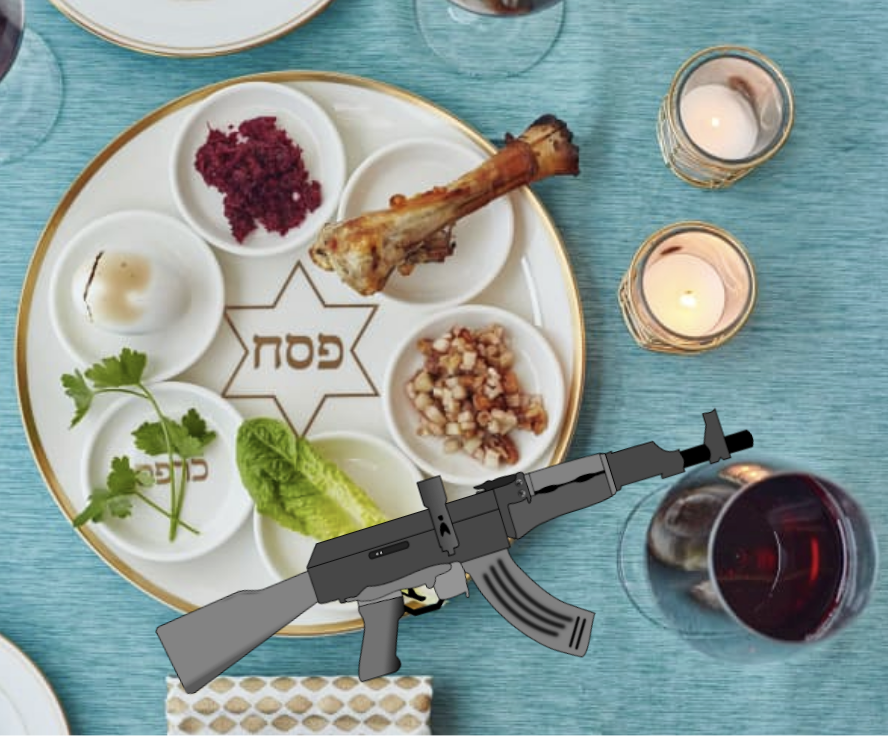
"Why is this night different from all other nights?" This Passover question has echoed across history, and is especially poignant this year amidst war, antisemitism and so much more tugging at the Jewish spirit. It's easy to forget that we are one people wearing a single human garment. This year reminds that there is no… Continue reading Free, Together
 David Evan Markus