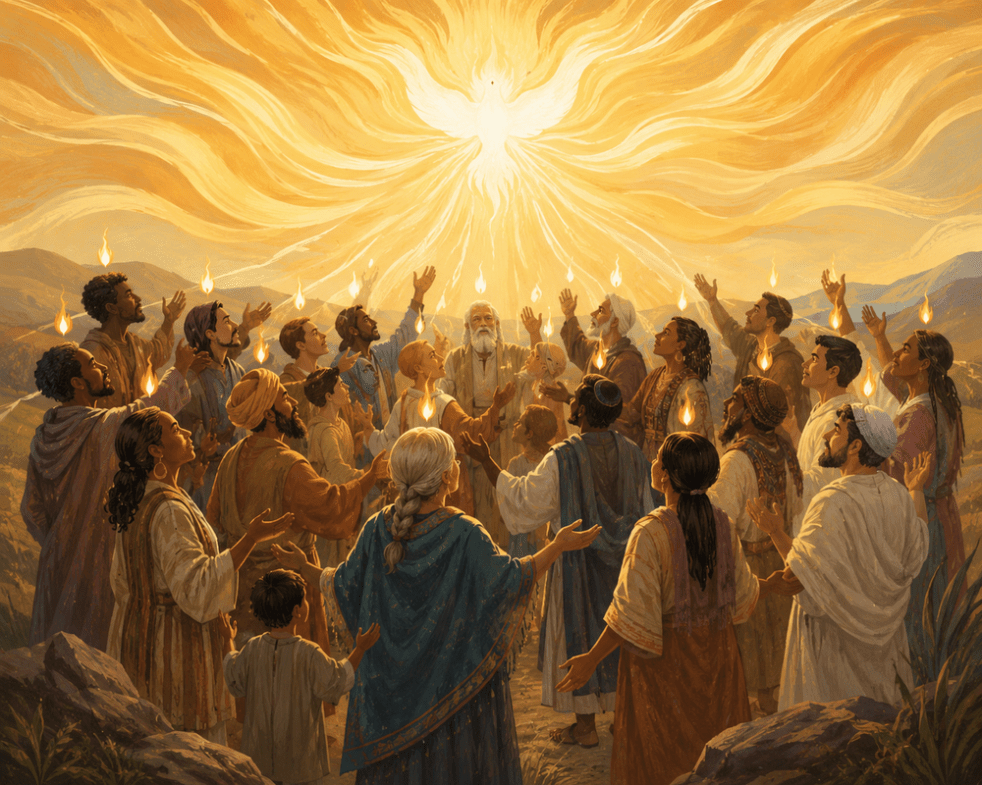
Maybe we imagine that the ideal of Jewish spirituality turns most on a spiritual leader.
Throughout history, rank-and-file Jews often deferred to spiritual leaders – from Moses to modern professional rabbis. Often they imagined that heightened spiritual connectivity was the special calling and province of the few.
This week’s Torah portion underscores that this pattern was wrong from the start.
By Rabbi David Evan Markus
Beha’alotekha 5786 (2026)
The teacher of my teachers, R. Zalman Schachter-Shalomi, often spoke of his 1960s Ph.D. studies at Temple University, particularly a seminar with theologian Rev. Dr. Howard Thurman. At the time, R. Zalman was a Chabad hasid (a perspective he’d soon set aside) and struggled theologically and halakhically to sit in Dr. Thurman’s class with a crucifix on the wall.
Before long, R. Zalman went to Dr. Thurman to discuss his struggle. Dr. Thurman attentively listened to R. Zalman, went quiet for a moment, then asked R. Zalman in perfect Hebrew, “Don’t you trust the holy spirit?”
R. Zalman understood, and it transformed him. Dr. Thurman didn’t mean the “holy spirit” of Catholic trinitarianism, or Christianity, or any particular dogma. Rather, he meant a spirit that transcends every dogma because every dogma inherently is limited. Religions are important because they offer pathways that encode wisdom, but paths aren’t destinations. “Theology,” R. Zalman later summarized, “is a mere afterthought of the believer, a puny attempt to describe the infinite.”
So why would we imagine that God (spirit, holiness, ultimate meaning) inherently empowers or is available to spiritual leaders more than everyone else?
From the start, Jews tended to get this wrong – and not just Jews. It’s a human phenomenon across religions and cultures to defer to spiritual leaders and leave most spiritual driving and intensity to them. Maybe because spirituality can challenge us, many people instinctively pull back and defer.
So it was at the Ten Commandments. The Voice at Sinai spoke to everyone, but the people pulled back. “You speak to us,” they said to Moses, “and we will obey. But do not let God speak to us [directly], lest we die” (Exodus 20:16-17). Moses tried to convince them otherwise, but the people wouldn’t hear. They sent Moses as their emissary.
So too in this week’s Torah portion. Nearly a year after Sinai, God was speaking to Moses, with 70 elders nearby, and then (Num. 11:25-29):
| וַיָּאצֶל מִן־הָרוּחַ אֲשֶׁר עָלָיו וַיִּתֵּן עַל־שִׁבְעִים אִישׁ הַזְּקֵנִים וַיְהִי כְּנוֹחַ עֲלֵיהֶם הָרוּחַ וַיִּתְנַבְּאוּ וְלֹא יָסָפוּ׃ וַיִּשָּׁאֲרוּ שְׁנֵי־אֲנָשִׁים בַּמַּחֲנֶה שֵׁם הָאֶחָד אֶלְדָּד וְשֵׁם הַשֵּׁנִי מֵידָד וַתָּנַח עֲלֵהֶם הָרוּחַ … וַיִּתְנַבְּאוּ בַּמַּחֲנֶה׃ וַיָּרָץ הַנַּעַר וַיַּגֵּד לְמֹשֶׁה וַיֹּאמַר אֶלְדָּד וּמֵידָד מִתְנַבְּאִים בַּמַּחֲנֶה׃ וַיַּעַן יְהוֹשֻׁעַ בִּן־נוּן מְשָׁרֵת מֹשֶׁה מִבְּחֻרָיו וַיֹּאמַר אֲדֹנִי מֹשֶׁה כְּלָאֵם׃ וַיֹּאמֶר לוֹ מֹשֶׁה הַמְקַנֵּא אַתָּה לִי וּמִי יִתֵּן כָּל־עַם יהו”ה נְבִיאִים כִּי־יִתֵּן יהו”ה אֶת־רוּחוֹ עֲלֵיהֶם׃ | [God] drew from the spirit on [Moses] and put it on the 70 elders; when the spirit rested on them, they prophesied without end. Two other men, the first named Eldad and the second named Meidad, remained in camp – yet the spirit also rested on them… and they prophesied in the camp. A boy ran to tell Moses, “Eldad and Meidad are prophesying in the camp!” Joshua son of Nun, Moses’ attendant since youth, answered, “Moses, my master, restrain them!” Moses said to him, “Are you jealous on my account? Let all YHVH’s people be prophets, that YHVH should put divine spirit on them!” |
It should only be, Moses urged Joshua, that each person should be prophetic, experiencing a profound connection to the sacred. It should only be, Moses urged, that he be a teacher but not the sole spiritual authority much less anyone’s intermediary.
So too for every rabbi. After all, Jews historically don’t abide intermediaries to the sacred, and “rabbi” merely means “teacher.” I like to think that I have what to offer based on my learning, experience, decades of deep (and ongoing) self-reflection and refinement, and covenantal job and joy to love my congregants. Even so, at best I’m only a pointer.
The point is each person’s own covenantal relationship with the sacred – their own Godspark, their own experience of holy spirit – refined by learning, experience, deep (and ongoing) self-reflection and refinement, and covenantal immersion in community.
My real job, and greatest joy, is to help point each person spiritually in that authentic direction as together we might seek it. We best do this spiritual seeking as a community (to balance excesses enfolded in community) and in deep dialogue with tradition (for its wisdom, ballast, and continuity).
Ultimately there is no outsourcing spirituality – not to me or any rabbi, and not to anyone. Heightened spiritual connectivity, engagement, learning and experience are not the callings or special province of some chosen or self-selected few.
They are exactly for you – and for all who choose to lean forward.

