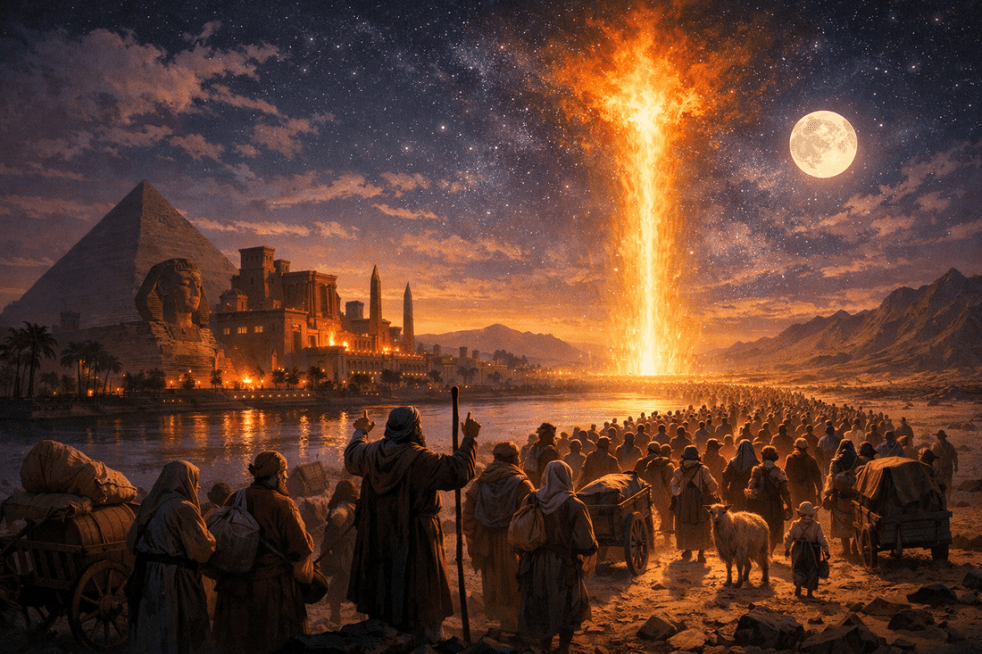
As we have for many centuries, the Children of Israel will gather at Passover seders to celebrate the liberation of bygone days.
When we gather with family and friends, we would do well to ask what liberation is, and when the ancient liberation began.
Why? Because the answers bear pivotally on who we are and what Passover asks of us now.
By Rabbi David Evan Markus
Passover 5786 (2026)At Passover tables around the world, a seemingly simple question shapes Jewish identity, coheres us amidst diversity and tumult, and propels us forward in shared meaning and resilience:
“Why is this night different?”
The question demands answers, and receives them from young and old. “We were slaves to a Pharaoh in Egypt, and then….”
Usually we rivet on what happened next – the bush that burned but was not consumed, the power that is liberation itself, the otherworldly call to “Let My people go,” the signs and wonders, the sea that split, the manna that fell, the cloud that led, the love that lured, the mountain that trembled, the Voice that called.
What happened “then” launched our ancestral journey from bondage to liberation, degradation to joy, darkness to light, and fear to faith. All that we are as a people today traces back to “then.”
Especially in troubled times, when tyrants abound and bondage ensnares so many in so many ways, we do well to ask a further question that animates the core of our peoplehood, and our power and duty to live our creed:
“When did the liberation from Egyptian bondage begin?”
Shalom Noah Berezovsky of Slonim, Belarus (a.k.a. “the Slonimer,” who died in 2000), asked this pivotal question in his masterpiece work, Netivot Shalom (“Paths of Peace”). To the Slonimer, liberation began not at the other side of the split sea, and not at the physical exodus from Egypt after the tenth plague slew the first-born of Egypt. Liberation began long before “Let My people go,” and even before the Burning Bush.
According to the Slonimer, liberation began with Exodus 2:23-25:
| וַיָּ֙מָת֙ מֶ֣לֶךְ מִצְרַ֔יִם וַיֵּאָנְח֧וּ בְנֵֽי־יִשְׂרָאֵ֛ל מִן־הָעֲבֹדָ֖ה וַיִּזְעָ֑קוּ וַתַּ֧עַל שַׁוְעָתָ֛ם אֶל־הָאֱלֹהִ֖ים מִן־הָעֲבֹדָֽה׃ וַיִּשְׁמַ֥ע אֱלֹהִ֖ים אֶת־נַאֲקָתָ֑ם וַיִּזְכֹּ֤ר אֱלֹהִים֙ אֶת־בְּרִית֔וֹ אֶת־אַבְרָהָ֖ם אֶת־יִצְחָ֥ק וְאֶֽת־יַעֲקֹֽב׃ וַיַּ֥רְא אֱלֹהִ֖ים אֶת־בְּנֵ֣י יִשְׂרָאֵ֑ל וַיֵּ֖דַע אֱלֹהִֽים׃ | “The king of Egypt died. The Children of Israel groaned from their bondage and cried out, and their cry from their bondage rose up to God. God heard their moaning, and God remembered the covenant with Abraham, Isaac and Jacob. God saw the Children of Israel – and God knew.” |
The Slonimer asked: What is it that God “saw” and “knew”? His answer: God “saw” and “knew” that our ancestors were becoming ready for freedom. Our readiness for liberation was precisely that we cried out – that we stopped accepting bondage in suffered silence.
In the words of modern psychology, in that moment our ancestors began to individuate from bondage. Someone totally immersed in their situation fuses with it and doesn’t cry out from it: they accept it and, in essence, become it. When our ancestors cried out, they stopped being fused to their situation. By a seemingly trivial but radical act, they took a first step away from being slaves: they became people suffering the depravity of being forced to work against their will.
Surely this first step hurt. It hurts to feel the pain of suffering. It hurts to feel the pain of bondage. It hurts to feel the pain of the world. Numbness can help get us through the day.
But they were numb no more. And by that first step, they reclaimed the moral standing to declare for the whole world to hear – at first just with wordless groans – that their situation was utterly wrong. They reclaimed a will to exert at all, even just within themselves. And by this first step, they reclaimed the will to be free in equal dignity, which is the birthright of all humanity.
In that moment, by their own defiant inner turn, our enslaved ancestors’ inner liberation began by their own agency. Our ancestors took one step, and immediately God saw and knew.
Immediately all the rest followed. Immediately came the Burning Bush, Moses’ reluctant deployment, “Let My people go,” the plagues and all the rest.
Fast forward some 3,500 years. “We were slaves to a Pharaoh in Egypt, and then” – then what? Now what?
“Then,” which is now, we have a duty to reclaim anew our agency against tyranny of every kind, even if our first step is a subtle inner move or just a first groan. First groans can change history.
“Then,” which is now, we have a duty to remind ourselves and each other – especially now – that no earthly power, however seemingly invincible, can squelch the human spirit without our own consent.
“Then,” which is now, we have a duty to hear the cries of others who groan under their own bondage, who yearn for the freedom and equal dignity that is the birthright of all humanity.
“Then,” which is now, we have a duty to rouse from our numbness – to feel the pain of what is wrong in our world and let that pain galvanize us to act.
“Then,” which is now, this night will truly be different from all other nights.
First published in Greenwich Jewish News, April 2026.
 David Evan Markus