| Even the most faithful among us have times of forgetting, doubting and disbelieving. Lifelong learning, gratitude and perspective suddenly can fly out the window. Even the most faithless among us have times of belief that challenge rationalism, atheism and all other -isms. Clutched certainty of disbelief, and with it clarity about how life is, suddenly can fall like a castle of sand. Our bittersweet fickleness of faith, faithlessness and everything in between is eminently human. What if we lean into them – all of them? |
By Rabbi David Evan Markus
Beshallah 5786 (2026)
Faith isn’t “heads or tails,” “this or that,” “yes or no.” Faith, knowing, belief, hope, questioning, doubt, unknowing, hedging, disbelief and dismissiveness together are an intricate tapestry whatever our theology or none at all.
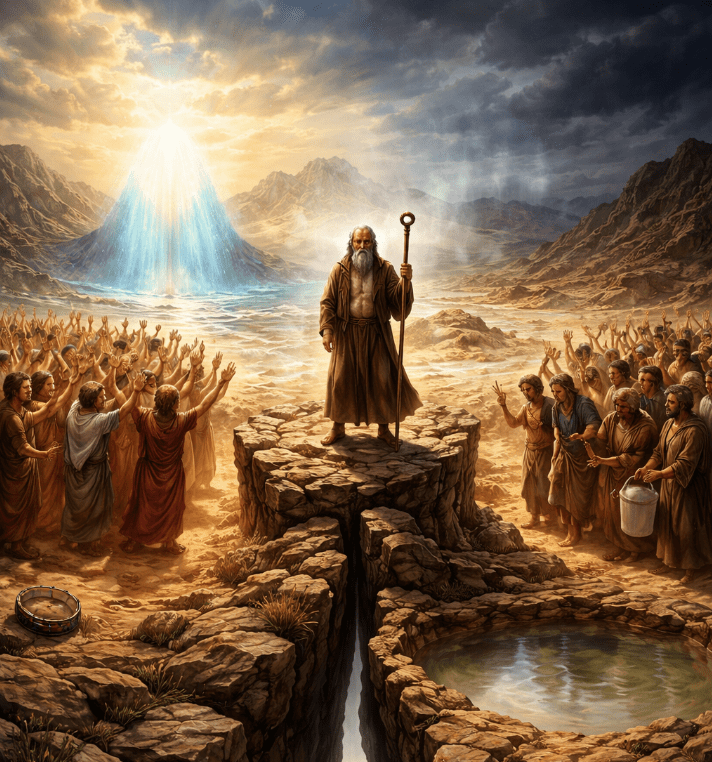
Even our ancestral liberation – the Splitting of the Sea and the journey forward – poignantly depicts this tapestry and its dazzling design.Finally our enslaved ancestors were free. They saw with their own eyes the Ten Plagues and their awesome power, signs and wonders.. Stuck between Pharaoh’s approaching army and the Sea of Reeds, they saw the greatest superhuman feat of all: the sea split before their eyes and they walked through – a wall of water on each side (Exodus 14:29). The sea flooded back and entrapped Egypt. Finally, they were free.
Each and every one of our newly liberated ancestors had faith: they all believed (Exodus 14:31). They sang their Song of the Sea (Exodus 15:1), which in liturgy becomes our Mi Khamokhah. They all said, “This is my God!” (Exodus 15:2). Miriam and the women picked up their timbrels and danced (Exodus 15:20).
A people of abiding and total faith was born. It lasted three whole days.
By then, our newly freed desert-wandering ancestors were thirsty, and they began to whine at Moses (Exodus 15:24). Within just weeks, they were ready to ditch freedom, and their liberating God, and head back to Egypt. Where did their faith go?
Even more, where did their knowing go? Faith, it is said, is something for which we have no evidence – but they saw the impossible with their own eyes. What happened?
Torah suggests what happened (Exodus 15:22-23):
| וַיַּסַּ֨ע מֹשֶׁ֤ה אֶת־יִשְׂרָאֵל֙ מִיַּם־ס֔וּף וַיֵּצְא֖וּ אֶל־מִדְבַּר־שׁ֑וּר וַיֵּלְכ֧וּ שְׁלֹֽשֶׁת־יָמִ֛ים בַּמִּדְבָּ֖ר וְלֹא־מָ֥צְאוּ מָֽיִם׃ וַיָּבֹ֣אוּ מָרָ֔תָה וְלֹ֣א יָֽכְל֗וּ לִשְׁתֹּ֥ת מַ֙יִם֙ מִמָּרָ֔ה כִּ֥י מָרִ֖ים הֵ֑ם עַל־כֵּ֥ן קָרָֽא־שְׁמָ֖הּ מָרָֽה׃ | Moses drove Israel from the Sea of Reeds. They went out into the desert of Shur, walked three days in the desert, and did not find water. They came to Marah [=bitterness] but they could not drink the waters of Marah because they were bitter – therefore they called it Marah. |
“They” were bitter? – “they” meaning the waters, or “they” meaning the people? Torah doesn’t say – and perhaps that’s the point. Torah implies that our ancestors became their reactions to what they perceived was happening. When events were great, our ancestors had such total faith that they sang and danced: there was no room for doubt. When things didn’t go their way, they became bitter (“what have You done for me lately?”) and faith flew out the window.
As adults, we know life isn’t fair, and the holy isn’t transactional. (As R. Danya Ruttenberg puts it, “God is not a gum ball machine” – put in a prayer or a mitzvah, get a colorful sweet chewy thing.) But even (especially) in all our adult experience and reasoning, we still carry childlike impulses – uncomplicated, authentic – that want what they want. And they remember.
When we hurt, when the world doesn’t go our way, when a prior “religious” experience or leader led us into a dead end or worse, when the answer is no, when we so yearn for what was that most anything else is prone to seem bitter – we easily can forget our faith and ourselves.
But that’s not the end of the story. A change came: through God, Moses made the waters “sweet” (Exodus 15:25) so the people could drink.Conversely, when everything seems to go our way, when we light up, when we experience the transformational power of spirit manifest before our very eyes, when the answer is yes, when our knowing permeates our bones – we easily can imagine that our sense of faith and spirit will stay just so.
But that’s not the end of the story. The world is not static, and neither are we. After the sea split there was “bitterness.” After “sweet” waters, there was hunger. After the manna (Exodus 16:14-15), there was craving for meat, craving for clarity, craving for safety….
We wax and we wane. We forget, and we remember – then forget again. We learn from them all, re-experience, re-ensoul. We change, for change is the only constant. The One we call YHVH bears that Name as a Hebrew anagram for was-is-will – becomingness, change.
Life itself is bittersweet. Our tapestry of experience stretches infinitely behind us, and infinitely forward, with dazzling inward possibility. Our journey lies ahead. Our faith might be fickle, but our story’s not over. In perhaps the most important ways, it’s barely begun.
 David Evan Markus