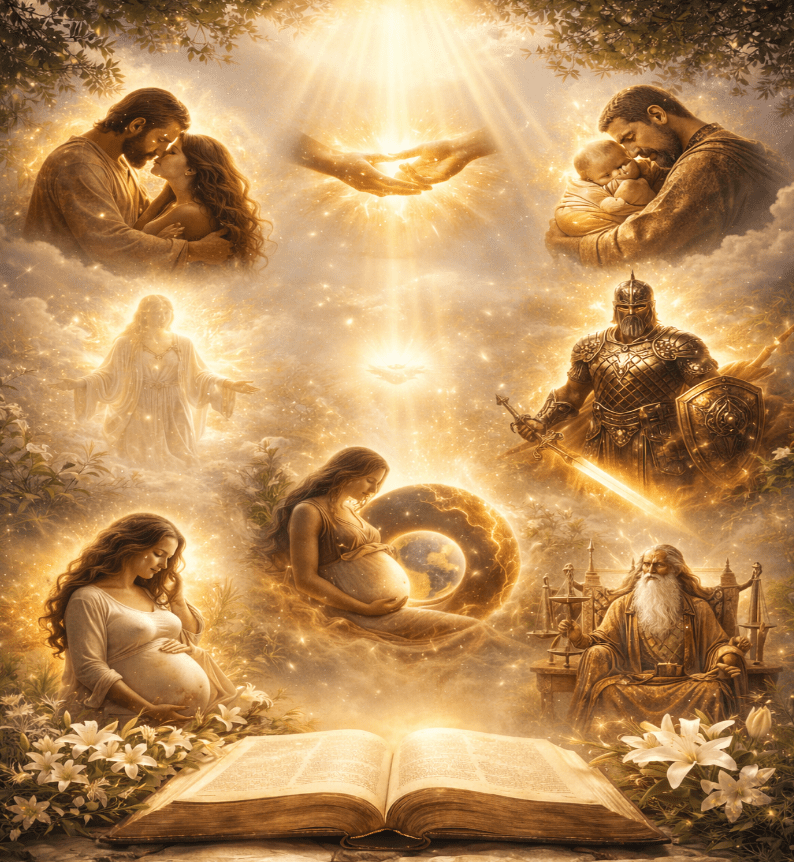
| We call our beloveds by many names. Whether a given name, an adopted name, a “pet” name or something else, each name encodes a special relationship and a story about it. Why should it be different for the Beloved that we call God? It’s not. “God” isn’t a Name but a role, a function. As for the Name of God – the One goes by many names. And each Name tells a profound story. That story is worth telling. |
By Rabbi David Evan Markus
Vaera 5786 (2026)
Note: There’s a lot happening in the world. We can’t help but be affected by it – and it can’t help but touch how we experience or don’t experience the sacred. Perhaps it also touches what we need the holy to be.
Shakespeare asked, “What’s in a name?” (Romeo & Juliet, II:ii [1597]). God’s answer to Moses at the Burning Bush came 3,000 years earlier, as part of our most enduring love story.
For ones we love, often we have love names. Even my dog has several love names, and she apparently answers to them all.
So for those of us who love God – as the eponymous V’ahavta puts it (Deut. 6:5), “Love YHVH your God with all your heart” – why shouldn’t God have love names? After all, “God” is not a name: “God” is an English word from a Germanic term (Gott) evoking a proper noun, a role.
We join Moses at the Burning Bush (Exodus 6:2-3):
| וַיְדַבֵּ֥ר אֱלֹהִ֖ים אֶל־מֹשֶׁ֑ה וַיֹּ֥אמֶר אֵלָ֖יו אֲנִ֥י יהו”ה׃ וָאֵרָ֗א אֶל־אַבְרָהָ֛ם אֶל־יִצְחָ֥ק וְאֶֽל־יַעֲקֹ֖ב בְּאֵ֣ל שַׁדָּ֑י וּשְׁמִ֣י יהו”ה לֹ֥א נוֹדַ֖עְתִּי לָהֶֽם׃ | Elohim spoke to Moses and said to him, “I am YHVH. I appeared to Abraham, to Isaac and to Jacob as El Shaddai, but My Name YHVH I did not make known to them.” |
Right here are three “names” for God –
Elohim (from Torah’s first sentence at Creation, a plural form of the Canaanite El, literally “God”), YHVH (the
Tetragrammaton), and
El Shaddai (which Abraham first heard – literally “God of the breasts,” maternal moniker, or “God of sufficiency”). Earlier at the Burning Bush (
Exodus 3:12-13), Moses heard God’s Name as
Ehyeh Asher Ehyeh (“I will be
what I will be”) then simply Ehyeh (“I will be”). This Name is Becomingness, Change, Futurity, the Inscrutable Mystery.The Voice next assures Moses that God has heard our enslaved ancestors’ cry and will fulfill the Covenant. On the far end of liberation, Moses will hear that God does so out of abundant love. For now, at the Burning Bush, Moses next hears (Exodus 6:6-7):
| לָכֵ֞ן אֱמֹ֥ר לִבְנֵֽי־יִשְׂרָאֵל֮ אֲנִ֣י יהו”ה֒ וְהוֹצֵאתִ֣י אֶתְכֶ֗ם מִתַּ֙חַת֙ סִבְלֹ֣ת מִצְרַ֔יִם וְהִצַּלְתִּ֥י אֶתְכֶ֖ם מֵעֲבֹדָתָ֑ם וְגָאַלְתִּ֤י אֶתְכֶם֙ בִּזְר֣וֹעַ נְטוּיָ֔ה וּבִשְׁפָטִ֖ים גְּדֹלִֽים׃ וְלָקַחְתִּ֨י אֶתְכֶ֥ם לִי֙ לְעָ֔ם וְהָיִ֥יתִי לָכֶ֖ם לֵֽאלֹהִ֑ים וִֽידַעְתֶּ֗ם כִּ֣י אֲנִ֤י יהו”ה֙ אֱלֹ֣הֵיכֶ֔ם הַמּוֹצִ֣יא אֶתְכֶ֔ם מִתַּ֖חַת סִבְל֥וֹת מִצְרָֽיִם׃ | “Therefore say to the Children of Israel: ‘I am YHVH. I will take you out from under the suffering of Egypt [=narrowness], and I will deliver you from their bondage, and I will redeem you with an outstretched arm and by great judgments. And I will take you to be My people, and I will be God to you, and you will know that I, YHVH, am your God – the One who takes you out from under the suffering of Egypt [=narrowness].'” |

We are to “know” this Name of YHVH to bespeak a Power of liberation – not only then but also now, in the present tense (“frees,” not freed).
We won’t even say
YHVH, so holy is it. Instead we most typically say
Adonai (“my Lord”), which emphatically is not a Name at all.We are to “know” that YHVH liberates from “Egypt” – a place, but also a narrowness by which we “suffer.” “Egypt” in Arabic (
مصر / mis‘r) and Hebrew (מצרים / mitzrayim) means “narrow,” so named for the Nile’s narrow zone of life amidst the vastness of the Sahara desert.
YHVH is an anagram for the Hebrew letters of the verb “to be” in the past, present and future tenses. YHVH is Spirit Transcending Time.
Because we are made b’tzelem
Elohim (in the divine image), therefore we too are Spirit Transcending Time.
Our pre-Mosaic ancestors could not know God as the Power of Liberation from Narrowness, a Spirit Transcending Time mapping to who we ourselves are. Of course not! Moses’ ancestors had no such history, no common sense of peoplehood. They had no common experience of Bondage, and no common experience of Liberation. They had no Ten Commandments, no Torah. They had none of modernity’s words for spirituality, religion, theology or psychology.
Only Moses, and an enslaved people liberated to become a people of God, could experience God as
YHVH – as Becomingness, as Liberator. Only they, therefore, could begin to spin all of the other Names by which Tanakh and Liturgy would call God – Creator, Eternal, Lover, Healer, Parent, Presence, Warrior, Womb, Teacher, Commander, Strength, Arbiter, Judge and more. Judaism would evolve
Thirteen Attributes, then dozens of Names ranging from functional to mystical. Islam would give
Allah (like
El) 99 names. All, at heart, are names rooted in love.Perhaps we call God not by the Name(s) that “God” needs: after all, a Becomingness of Liberation that Transcends Time also must transcend all Names. Perhaps we call God, rather, by the Name we need from time to time, even moment to moment.By what love name do you most need to call the One? What do you most need the sacred to be for you now, in this world, at this moment? What if you prayed that Name, or infused that Name into
YHVH or
Adonai?
Perhaps doing just that is our next in the liberation we most need for ourselves and our broken world.
 David Evan Markus