| We live in an era of rising global strongmen and eroding guardrails for democracy. Judaism has seen much in its 3,500 years, including the rise and fall of many strongmen. Effective frontal confrontations are rare against absolute power and its penchant for corruption. Such powers tend to entrench themselves by means as damaging and corrupt as they are. More common are less attention-grabbing ways to subvert absolute power. These tend to be less frontal, less direct, maybe less effective taken one by one. But together, they make the difference. |
By Rabbi David Evan Markus
Vayigash 5786 (2025)
Niccòlo Macchiavelli, political theorist of early 1500s “The Prince” fame, had plenty of reason to write that “Power tends to corrupt, and absolute power corrupts absolutely.” History already proved his point amply – and the next five centuries would amplify it as power and tyrants became ever more lethal.
History records many direct confrontations to absolute power ranging from armed rebellions (the American Revolution) to mainly peaceful protests and civil disobedience (the U.S. Civil Rights Movement). Hanukkah and Purim both emerged after armed battles against tyrants; even the Holocaust faced heroic revolts from within.
In most instances, subverting absolute power takes less visible, violent and newsworthy forms – but profoundly effective even so. Buried in Torah’s story of Joseph is perhaps a first example so subtle that on first read we might miss it, but in context it profoundly stood up for values.
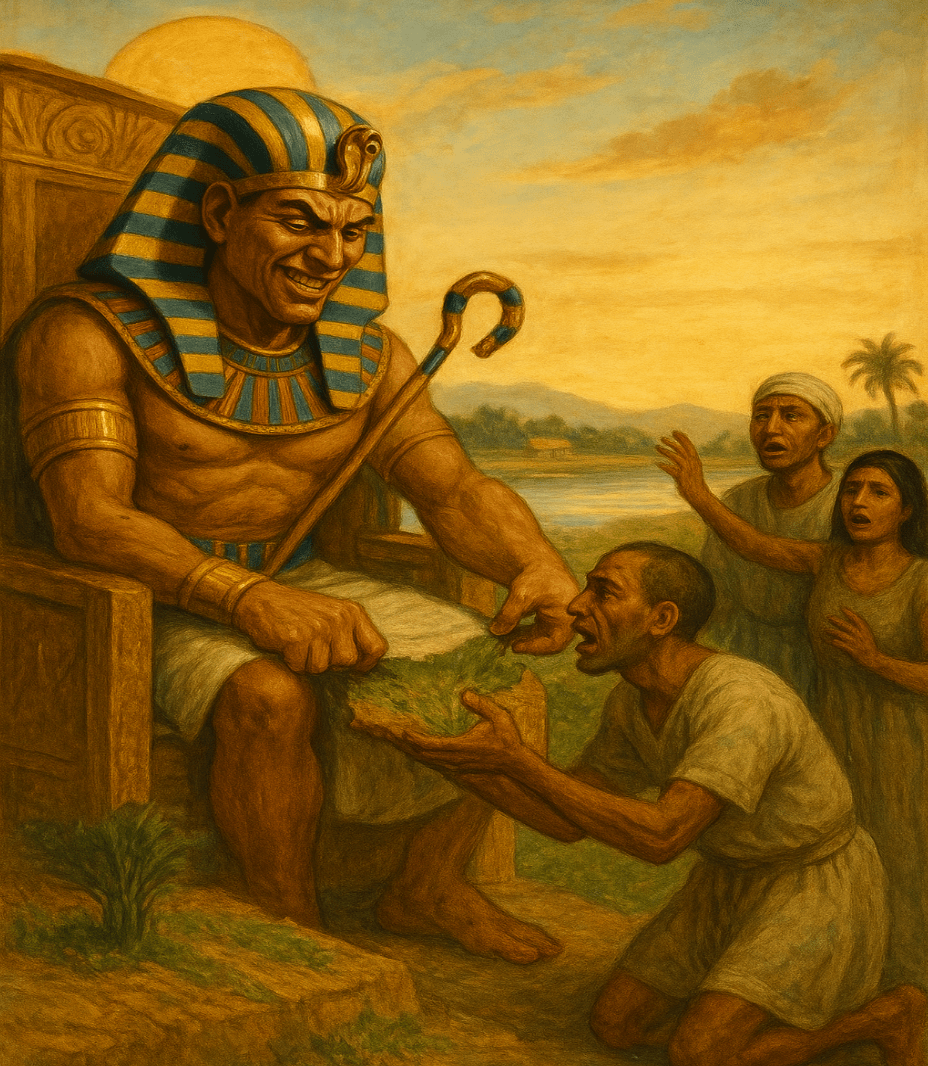
During the Egyptian famine that catapulted Joseph to power as Pharaoh’s minister, the starving people of Egypt went to Joseph and pleaded to him (Genesis 47:19–20):
| לָ֧מָּה נָמ֣וּת לְעֵינֶ֗יךָ גַּם־אֲנַ֙חְנוּ֙ גַּ֣ם אַדְמָתֵ֔נוּ קְנֵֽה־אֹתָ֥נוּ וְאֶת־אַדְמָתֵ֖נוּ בַּלָּ֑חֶם וְנִֽהְיֶ֞ה אֲנַ֤חְנוּ וְאַדְמָתֵ֙נוּ֙ עֲבָדִ֣ים לְפַרְעֹ֔ה וְתֶן־זֶ֗רַע וְנִֽחְיֶה֙ וְלֹ֣א נָמ֔וּת וְהָאֲדָמָ֖ה לֹ֥א תֵשָֽׁם׃ וַיִּ֨קֶן יוֹסֵ֜ף אֶת־כָּל־אַדְמַ֤ת מִצְרַ֙יִם֙ לְפַרְעֹ֔ה כִּֽי־מָכְר֤וּ מִצְרַ֙יִם֙ אִ֣ישׁ שָׂדֵ֔הוּ כִּֽי־חָזַ֥ק עֲלֵהֶ֖ם הָרָעָ֑ב וַתְּהִ֥י הָאָ֖רֶץ לְפַרְעֹֽה׃ | “Don’t let us die before your eyes – not us and not our land. Buy us and our land for bread, and we with our land will be serfs to Pharaoh: give [planting] seed so we can live and not die – and so the land will not become waste.” Joseph gained for Pharaoh all the land of Egypt, each Egyptian having sold their fields because the famine was too much for them. The land became Pharaoh’s. |
This moment made Pharaoh fabulously wealthy: he now owned all the land of Egypt itself – a forerunner to modern absolute monarchy. It was manipulative and cruel, and Joseph helped it happen. True.
And, read again. The people said, “Buy us and our land,” a deal Pharaoh might have approved – but not Joseph. Torah holds only that Joseph purchased the land. Joseph would not turn people into property, as he himself had been.
This not-worst outcome might seem scant comfort to us over 3,500 years later. It might pain us that anyone would capitalize on disaster or condition humanitarian aid on anything. Yet in its day, Joseph’s subtle subversion was a big deal: it might be Western life’s first recorded check on otherwise absolute power.
Society’s tides can be tremendously powerful. It is rare that one person, group or moment will halt a tyrant or radically change history’s course. We might despair that we can’t do more, and therefore despair of doing anything.
Yet as Joseph shows us, we all can find ways. But even if less newsworthy or entirely invisible, there are ways large and small that people of all kinds can bend history and redirect its waves – and collectively they add up.
We do it every time we stand up for principle over power.We do it every time we think for ourselves, however strong another might be.We do it every time we use our market power to uplift values over convenience.Find your ways and take your stands. And as you do, know that you join a flow over 3,500 years strong of our people doing just that – shifting the course of history bit by bit, insisting that there be no absolute power in human affairs.
 David Evan Markus